
 See My Latest Article on HelloNation
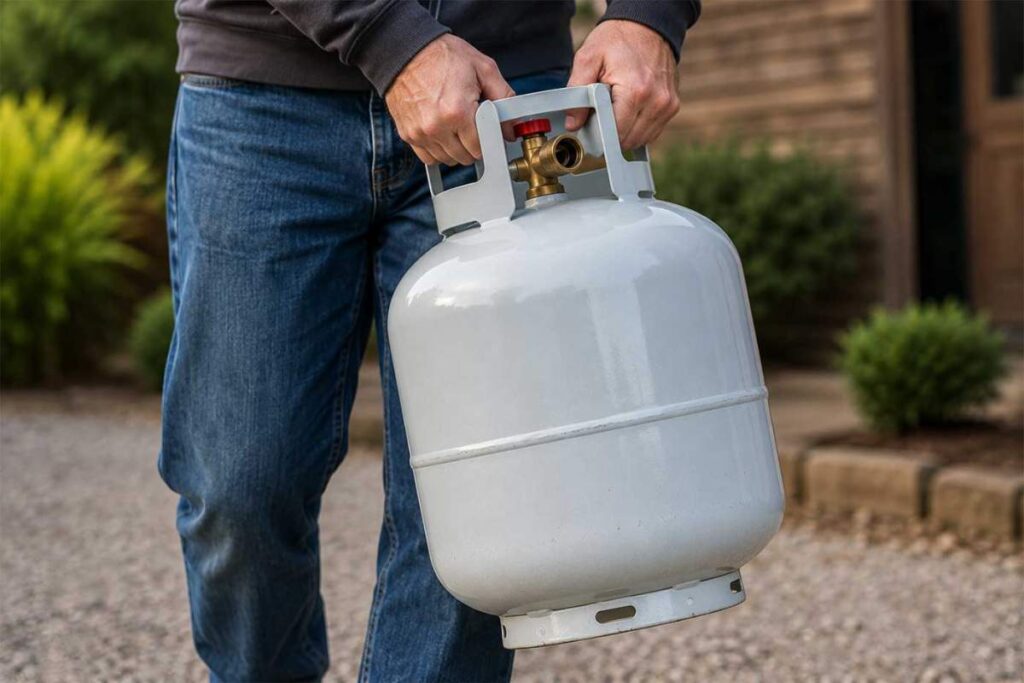
Before having a propane tank refilled, inspect the container, confirm that it is approved for refilling, and make sure it can be transported safely. A refill should be delayed if the tank is damaged, leaking, out of date, missing required parts, or exposed to unusual heat or fire.
Is the tank visibly damaged?
A propane cylinder should be clean enough to inspect and free from damage that could weaken its metal walls or fittings. Do not take a cylinder for filling if it has:
- Heavy rust, corrosion, or deep pitting, especially around the bottom
- Dents, bulges, cuts, cracks, or signs of impact
- Fire or heat damage
- A damaged or missing foot ring
- A missing, bent, or damaged protective collar
- A missing valve cap where one is required
- A valve or pressure-relief device that appears damaged
The U.S. Department of Transportation’s Pipeline and Hazardous Materials Safety Administration advises that cylinders in poor condition should not be filled. A tank can look usable from a distance while having corrosion or damage in a location that matters for structural safety. ([phmsa.dot.gov](https://www.phmsa.dot.gov/training/hazmat/your-cylinder-safe-fill?utm_source=openai))
Coastal humidity, rain, lawn irrigation, and standing water can accelerate surface corrosion around the base of an outdoor cylinder. In Port Neches, TX, checking the underside and the area around the foot ring is especially worthwhile after extended periods of wet weather.
Is the cylinder the type that can be refilled?
Not every propane container is designed for repeated filling. Standard refillable cylinders have markings that identify their specification and service history. Small, disposable camping bottles marked as DOT-39 cylinders must never be refilled, even if they appear undamaged. They are designed for one-time use and can fail when subjected to the stresses of emptying and refilling. ([phmsa.dot.gov](https://www.phmsa.dot.gov/regulatory-compliance/phmsa-guidance/stop-never-refill-1-lb-propane-bottles-0?utm_source=openai))
A typical refillable cylinder may include:
- A manufacturer or specification marking
- A serial or identifying number
- A manufacture date
- A tare-weight marking, often shown as “TW”
- A requalification or retest marking, when applicable
Do not rely only on the cylinder’s size or shape. A one-pound bottle, for example, may be non-refillable even though larger cylinders used for outdoor cooking are commonly designed for refilling.
Does it have an overfill prevention device?
Most portable propane cylinders in the common four- to forty-pound range require an overfill prevention device, or OPD, under applicable propane safety standards. The OPD is built into the cylinder valve and helps stop filling before the container exceeds its permitted liquid level. Many OPD valves have a triangular handwheel marked “OPD.” ([phmsa.dot.gov](https://www.phmsa.dot.gov/faqs/cylinder-approvals-overfilling-prevention-device-opd-faqs?utm_source=openai))
An OPD does not make a damaged or outdated cylinder safe. It is one safety feature, not a substitute for inspection. If the valve does not appear to have an OPD, or if the marking is unclear, the cylinder should be evaluated by the filling facility rather than filled by assumption.
Is the cylinder within its requalification period?
Propane cylinders must be periodically requalified for continued service. The original manufacture date and later retest markings help determine whether a cylinder is still eligible for filling. Texas safety information explains that steel and aluminum cylinders generally require requalification no later than 12 years after manufacture, with the exact service period depending on the inspection method and marking. ([rrc.texas.gov](https://www.rrc.texas.gov/media/smwldgvi/propane-pointers.pdf?utm_source=openai))
Look for date information stamped into the collar or marked on the cylinder. A refill facility will also inspect the date and may refuse a cylinder that is past its allowed period.
The date is easy to overlook when a cylinder has been stored for several seasons. This is particularly common with tanks used only for occasional grilling, outdoor cooking, or emergency backup. Before loading an older cylinder into a vehicle, check its date first.
Are the valve and relief components intact?
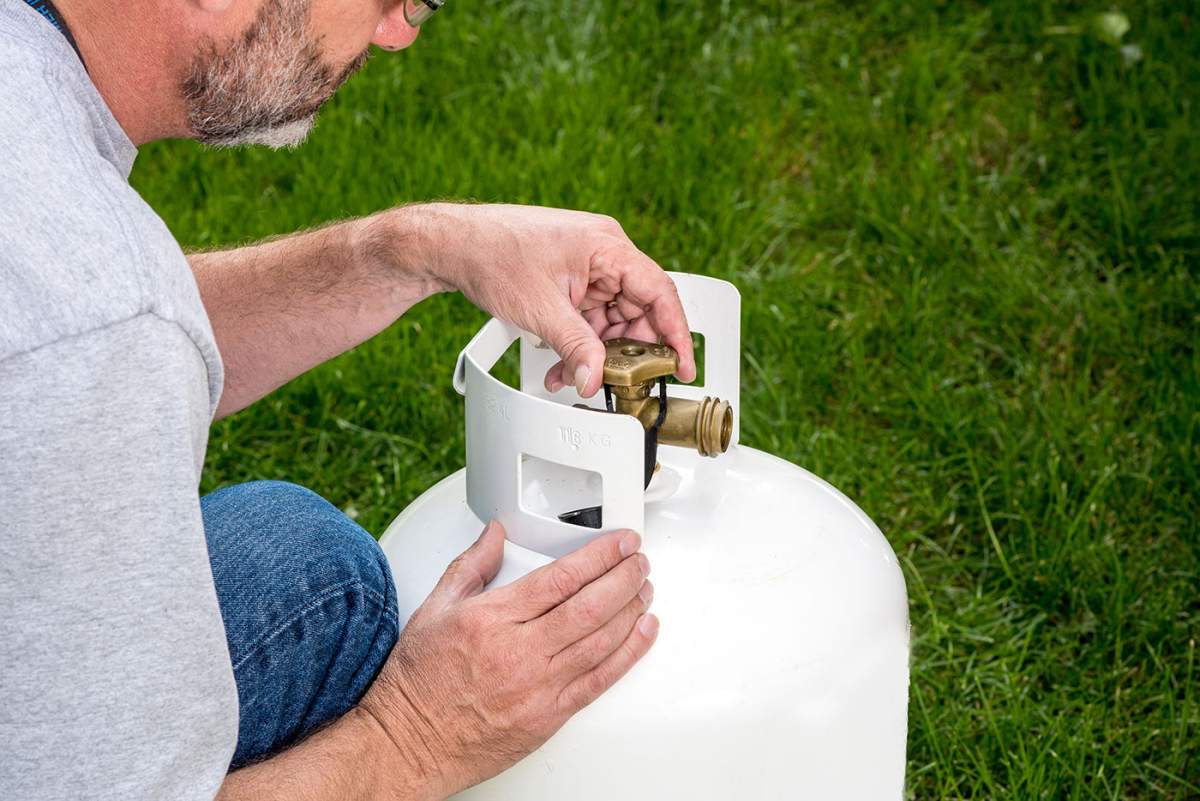
The valve should not be loose, bent, leaking, or visibly damaged. Do not attempt to tighten, replace, remove, or repair a propane valve yourself. A pressure-relief device also must remain unobstructed and undamaged.
Never paint over, scrape off, or alter the cylinder’s required markings. The markings provide information needed to identify the container, determine its status, and assess whether it is approved for service.
If the cylinder has been involved in a fire, has been dropped from a height, or has a valve problem, set it aside in a safe outdoor location away from ignition sources and have it evaluated through an appropriate propane safety channel. Do not try to test it with a flame.
Is there a propane odor or suspected leak?
A strong rotten-egg or sulfur-like smell near the cylinder is a reason to stop, not a reason to proceed with filling. Do not operate electrical switches, use a lighter, smoke, start a vehicle nearby, or attempt to locate the leak with an open flame.
Move people away from the area and, if the odor is strong or the source is uncertain, contact the fire department from a safe location. Propane vapor can collect in low areas because it is heavier than air.
Do not transport a leaking cylinder in a passenger compartment or enclosed vehicle. A cylinder with a suspected leak needs safe handling by trained personnel.
Has the tank been stored and transported correctly?
Before taking a portable cylinder for refilling, close the service valve and keep the cylinder upright. Secure it so it cannot roll, tip over, or strike other objects. Ventilation is important during transport; a propane cylinder should not be left in a hot vehicle or enclosed passenger area.
After filling, take the cylinder directly to its intended storage or use location. Do not leave it in a parked vehicle, on a porch exposed to intense heat, or near an appliance, grill flame, electrical equipment, or other ignition source.
Warm Gulf Coast weather can raise temperatures inside vehicles and enclosed spaces quickly. A cylinder should remain outdoors in an upright position, protected from physical damage and excessive heat, while still allowing the valve and relief area to remain accessible.
What should be checked after the refill?
Before reconnecting the cylinder, inspect the hose, regulator, connector, and appliance connection for cracks, wear, or damage. Keep the cylinder upright and follow the appliance manufacturer’s instructions.
After connection, a leak check may be performed with an approved leak-detection solution or soapy water at the connection points. Bubbles indicate a leak. Never use a match, lighter, or other flame to check for escaping propane.
If a connection leaks, close the cylinder valve if it is safe to do so, keep ignition sources away, and have the system evaluated by a qualified propane technician. Texas regulates propane activities, including cylinder filling, and requires licensed or properly certified personnel for covered work. ([rrc.texas.gov](https://www.rrc.texas.gov/alternative-fuels/liquefied-petroleum-gas-propane/perc-dispenser-operations-exemption/?utm_source=openai))
A practical pre-refill check
Before leaving home, confirm that the cylinder is:
- Refillable rather than disposable
- Free from severe rust, dents, cracks, fire damage, or bulges
- Equipped with an appropriate valve and overfill prevention device
- Within its requalification period
- Free of suspected leaks
- Transported upright, secured, and protected from heat
The filling facility performs its own inspection and can refuse a cylinder that does not meet safety requirements. That refusal is a protective measure, not an indication that the tank is merely low on propane. A cylinder that fails inspection should not be modified or repaired casually; it should be handled through a qualified and lawful propane service process.