
 See My Latest Article on HelloNation
Why is empty space left inside a propane tank?
Propane tanks are intentionally filled to only about 80% of their liquid capacity. The remaining space provides room for the liquid propane to expand as its temperature rises. ([cloudinary.propane.com](https://cloudinary.propane.com/image/upload/v1600291237/website-media/Off-Road_Applications_of_Propane_Engine_Fuel.pdf?utm_source=openai))
This design is especially relevant for households in Port Neches, TX, where hot weather, strong sunlight, and warm outdoor surfaces can raise the temperature of a tank during much of the year. The tank may look only partly full, but that unused space is a necessary part of safe operation.
Propane is stored as a liquid under pressure. As the liquid warms, it expands. If a tank were filled completely with liquid propane, there would be little or no room for that expansion. Pressure could increase beyond the conditions the tank and its valves are designed to manage.
The 80% fill level does not mean that 20% of the fuel is missing. The upper portion contains propane vapor, which allows the liquid to expand without immediately filling the entire container.
How much does propane expand when heated?
Liquid propane expands significantly as its temperature increases. A commonly used reference is that propane liquid expands by about 1% for every 6°F increase in temperature. ([cloudinary.propane.com](https://cloudinary.propane.com/image/upload/v1600291237/website-media/Off-Road_Applications_of_Propane_Engine_Fuel.pdf?utm_source=openai))
For example, a tank filled during a cool morning may contain liquid at a lower temperature. If the tank later sits in direct sunlight or on a hot surface, the propane can become warmer and occupy more space.
The air temperature also does not tell the whole story. A tank exposed to sunlight, located near a heat-producing appliance, or resting on a hot concrete surface can become warmer than the surrounding air. Day-to-night temperature changes can also affect pressure inside the container.
That is why a tank that appears to have adequate room on a cool day should not be filled beyond its permitted level. The available vapor space is needed when conditions change.
Does the vapor space make propane less effective?
No. The vapor space does not prevent a properly connected appliance from operating normally.
Inside the tank, liquid propane changes into vapor as fuel is used. Appliances burn the vapor, not the liquid. As pressure and temperature shift, more liquid propane vaporizes to maintain the supply needed by the appliance.
A tank therefore does not need to be filled to the top to provide usable fuel. In fact, completely filling it with liquid would create a hazardous condition rather than improve performance.
Propane also expands dramatically when it changes from a liquid into a gas outside the tank. This is one reason propane leaks must be treated seriously, particularly in enclosed or poorly ventilated spaces. ([propane.com](https://propane.com/safety/safety-guide-for-propane-users/?utm_source=openai))
What prevents a small propane cylinder from being overfilled?
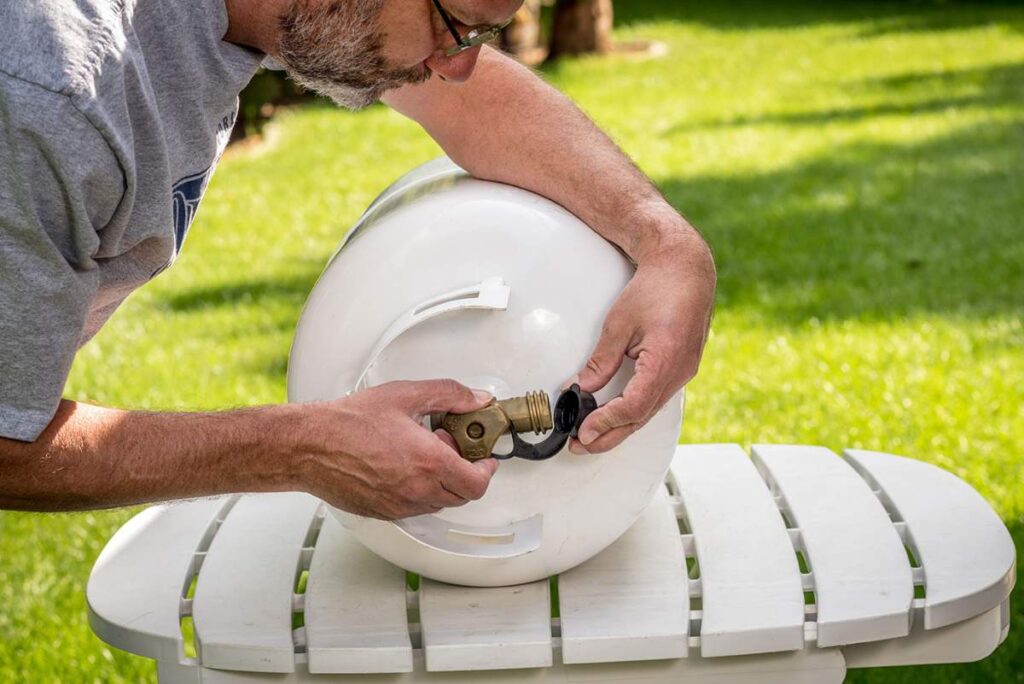
Many portable cylinders use an overfilling prevention device, commonly called an OPD. It is a backup shutoff device built into the cylinder’s filling valve and designed to stop filling before the cylinder exceeds its permitted liquid level. ([phmsa.dot.gov](https://www.phmsa.dot.gov/faqs/cylinder-approvals-overfilling-prevention-device-opd-faqs?utm_source=openai))
An OPD is commonly found on portable cylinders used for grills and similar household equipment. It is often identified by a triangular handwheel, although the handwheel’s shape alone should not be treated as proof that the cylinder is safe or current.
The device is an additional safeguard, not a reason to ignore proper filling procedures. Cylinders still need to be in acceptable condition, within their requalification period when applicable, and filled using approved equipment and methods.
A damaged, badly corroded, leaking, or out-of-date cylinder should not be used simply because it has an OPD.
Why can pressure rise even when the tank is not full?
Tank pressure is affected primarily by temperature, not just by how much fuel remains. As propane warms, its vapor pressure rises. As it cools, vapor pressure falls. Outside temperature, sunlight, and changing weather conditions can therefore produce noticeable pressure changes during the day. ([cloudinary.propane.com](https://cloudinary.propane.com/image/upload/v1600291237/website-media/Off-Road_Applications_of_Propane_Engine_Fuel.pdf?utm_source=openai))
This may help explain why a pressure-relief valve can release vapor even when a tank is not visibly full. The valve is designed to protect the container if internal pressure becomes too high. A release from the valve should not be ignored, especially if it continues or is accompanied by a strong propane odor.
Do not attempt to modify, block, remove, or test a relief valve. Keep ignition sources away from a tank that may be releasing propane, and move people away from the area if a leak or significant release is suspected.
How should propane tanks be stored during hot weather?
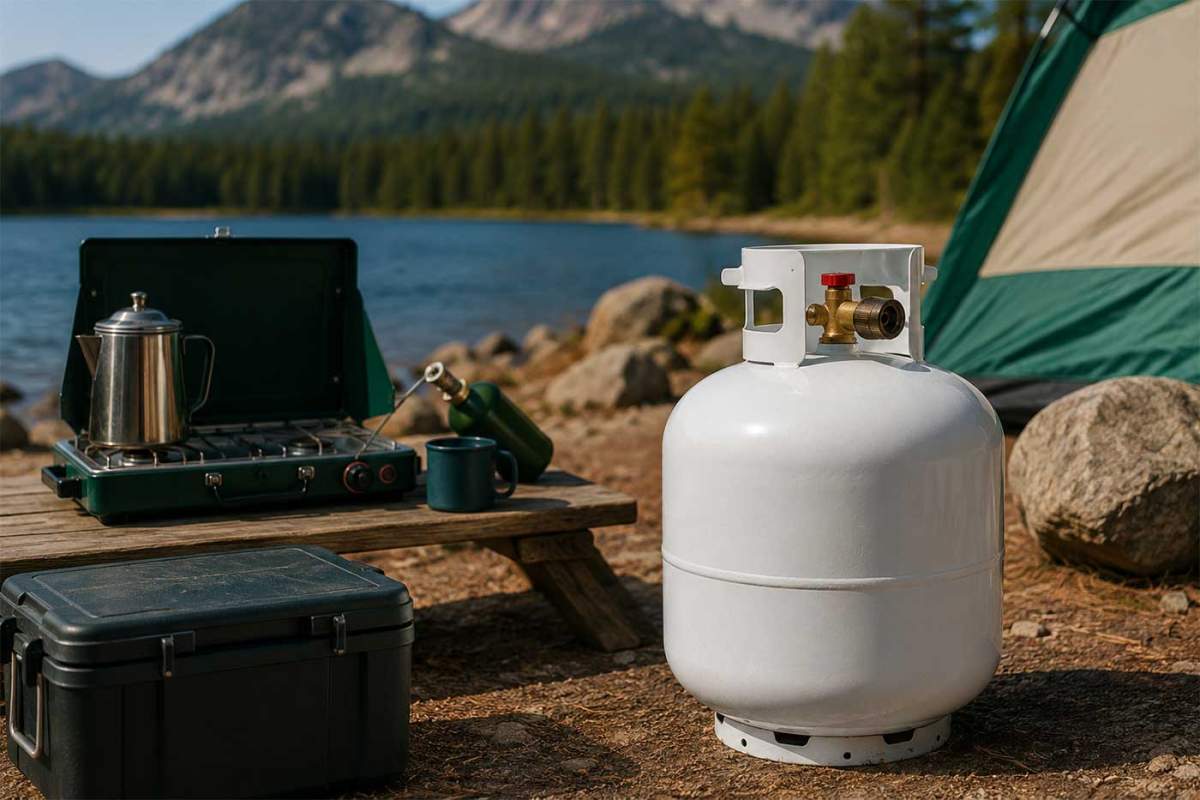
Portable propane cylinders should be stored outdoors in an upright position, away from excessive heat, ignition sources, and areas where they could be struck or damaged. They should not be stored inside a home, garage, enclosed porch, or other occupied enclosed space. ([cloudinary.propane.com](https://cloudinary.propane.com/images/v1634825747/website-media/21PERC0690_7321-LP-21_Ag-Lesson-Plan-9_LR/21PERC0690_7321-LP-21_Ag-Lesson-Plan-9_LR.pdf?_i=AA&utm_source=openai))
For local households, practical storage considerations include:
- Keep the cylinder upright on a stable, level surface.
- Leave the cylinder’s valve and relief-device area unobstructed.
- Avoid placing it beside grills, fire pits, generators, or other heat sources.
- Do not leave a cylinder in a closed vehicle, especially during warm weather.
- Protect it from vehicle impact, falling objects, and children’s activities.
- Do not store spare cylinders underneath stairs or in an enclosed storage room.
A cylinder should also be kept away from standing water and conditions that promote rust. Surface corrosion, deep pitting, damaged valves, or a strong propane odor are reasons to stop using the cylinder and seek qualified safety guidance.
Is an 80% reading a sign that something is wrong?
Usually, no. An approximately 80% reading is generally the expected maximum liquid fill level for many propane tanks and cylinders. It is not an indication that the tank was filled incorrectly or that the remaining space is wasted.
The percentage may be shown by a fixed liquid-level gauge, a scale reading, or the filling method used by the operator. Gauge readings can vary with temperature and tank position, so they should not be interpreted as an exact measurement of usable fuel in every situation.
Large stationary tanks and small portable cylinders can have different filling procedures, permitted capacities, and inspection requirements. The correct limit depends on the tank’s design, markings, intended use, and applicable safety rules.
The basic principle remains the same: propane needs room to expand. Keeping that space available helps prevent excessive pressure and gives the tank’s safety systems the operating room they were designed to have.
What should residents do if a tank smells like propane?
A strong odor resembling rotten eggs, a hissing sound, visible frost near a valve, or unusual pressure-release activity may indicate a propane problem.
If a leak is suspected:
- Leave the area immediately.
- Avoid flames, cigarettes, light switches, electrical equipment, and vehicles near the suspected leak.
- Do not attempt to repair the tank or valve.
- From a safe location, contact emergency services or an appropriate qualified propane safety professional.
- Do not return until the area has been declared safe.
Understanding the reason for the vapor space helps explain several propane safety rules at once: tanks are not filled completely, cylinders must be kept away from excessive heat, relief valves must remain unobstructed, and damaged containers should not be used.